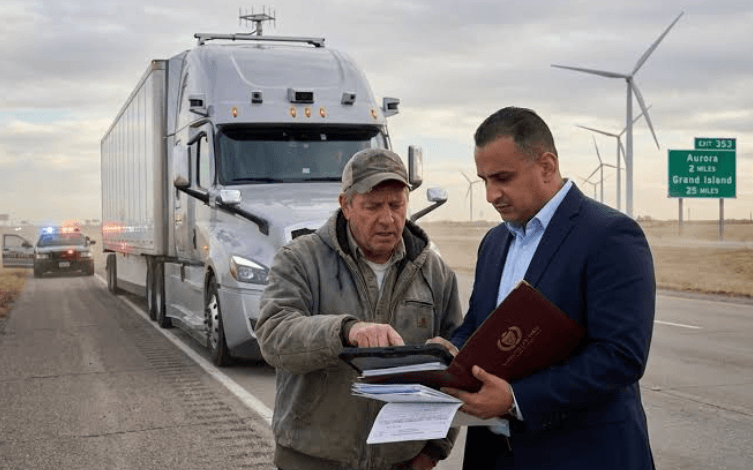
You might be trying to make sense of a truck crash that changed everything in a matter of seconds. Before the collision, the rules that govern commercial trucks probably felt far away and technical. Afterward, those same rules can suddenly matter a great deal, because they may help explain why a wreck happened, who failed to follow the law, and what evidence could support your claim. If you feel overwhelmed by the mix of federal and state rules, that reaction makes sense. Working with an expert such as those at poltlaw, the short answer is this: federal trucking rules often set the baseline for safety, while New York can add state specific requirements that carriers and drivers must also follow.
That overlap can be hard to sort out when you are already dealing with medical care, lost income, and calls from insurers. Still, understanding the difference between federal and New York rules can help you see where negligence may have occurred. It can also help you understand why a personal injury lawyer may look at driver logs, vehicle inspections, permits, and company records so closely after a serious truck crash.
Why do federal and New York trucking rules both matter after a crash?
Commercial trucking is not governed by one simple rulebook. Interstate carriers often fall under federal oversight, especially under Federal Motor Carrier Safety Administration rules. Intrastate trucking, which stays within New York, may still be subject to many similar safety duties, along with state rules on operation, permits, and equipment. Because of that tension, you might wonder which law controls your case. The answer often depends on the truck’s route, the carrier’s status, the type of cargo, and where the violation occurred.
For example, a driver hauling goods from Pennsylvania into New York may need to comply with federal hours of service limits. Those rules are designed to reduce fatigue, which is one of the most common causes of truck wrecks. If a driver stayed on the road too long, skipped required rest, or falsified logs, that can become a key issue in a claim. You can review the federal hours of service rules to see how rest and driving time are regulated.
New York also has its own transportation rules and enforcement framework. State agencies regulate matters such as highway use, operating authority, and certain safety requirements that apply within the state. If a carrier ignored New York specific obligations, that may also point to negligence. You can find New York’s legal rule sources through the New York State Department of Transportation rules page.
What makes Federal vs. New York State trucking regulations so confusing in real life?
The confusion often comes from overlap. A trucking company can be following one set of rules in theory while breaking another in practice. A truck may have proper federal registration but poor maintenance. A driver may appear qualified on paper but may not have followed state route restrictions or permit rules. A company may pressure a driver to meet a deadline even when weather, fatigue, or cargo issues make the trip unsafe.
And when a crash happens, the legal issues are rarely limited to one bad decision. There may be questions about brake inspections, cargo securement, hiring practices, drug and alcohol testing, logbooks, black box data, and whether the vehicle was even allowed to operate in that area. New York also has detailed rules for certain dimensions, weights, and special hauling conditions. For instance, oversize and overweight operations are addressed in state materials such as Part 820.
So, where does that leave you? It means a crash is not always just about the moment of impact. It may be about a chain of safety failures that started hours, days, or even weeks earlier.
How do federal trucking laws and New York truck rules compare?
When people hear New York trucking laws vs federal rules, they often assume one cancels out the other. Usually, that is not how it works. Federal law may set a broad safety floor, while New York may impose added requirements for operations within the state. Looking at the rules side by side can make the picture clearer.
| Issue | Federal Focus | New York State Focus | Why It Matters in a Claim |
|---|---|---|---|
| Driver hours | Hours of service limits, rest breaks, log compliance | May incorporate or align with federal standards for in state operations | Fatigue can support negligence if a driver stayed on duty too long |
| Vehicle safety | Inspection, repair, maintenance duties for commercial carriers | State enforcement and additional operation requirements | Poor maintenance can point to company level fault |
| Size and weight | General commercial standards and interstate requirements | Permits, route limits, oversize and overweight rules | Improper loading or unlawful operation can increase crash risk |
| Carrier oversight | Interstate registration and federal safety compliance | State authority, local operation rules, enforcement actions | Multiple violations may show a pattern of unsafe conduct |
This is where a truck accident regulations overview becomes more than a technical exercise. It can reveal whether the crash was preventable and whether a company cut corners to save time or money.
What should you do right away if trucking rule violations may be involved?
1. Preserve evidence early. Trucking evidence can disappear fast. Driver logs may be updated, electronic data can be overwritten, and maintenance records may not stay easy to access. If you suspect a commercial truck driver or carrier broke a rule, quick action matters.
2. Get your medical record in order. Even if liability seems obvious, your injury claim still depends on clear proof of harm. Follow treatment, keep appointment records, and document how your injuries affect work, sleep, mobility, and daily life. That record helps connect the crash to the losses you are living with now.
3. Ask whether the case involves both state and federal violations. This is where a personal injury lawyer can be especially helpful. A lawyer can investigate the carrier’s status, the route, permits, inspection history, and whether federal safety rules or New York transportation rules were broken. In many truck cases, that deeper review changes the whole picture.
See also: Why Local Service Businesses Like Waterproofing Are Quietly Booming
When does a personal injury lawyer become especially important?
If your crash involved a tractor trailer, delivery truck, box truck, or another commercial vehicle, the case may be more complex than a standard car accident claim. Trucking companies and insurers often move quickly, and they usually understand the value of records that injured people do not even know exist. That can leave you at a disadvantage if you are trying to recover while also proving fault.
You do not need to know every regulation on your own. What matters is knowing that these rules exist, that they may explain why the crash happened, and that violations can strengthen your case. When the facts are reviewed carefully, both federal and New York regulations can help show whether a driver, carrier, maintenance provider, or another party failed to protect the public.
If you are facing the fallout from a truck crash, take a breath and start with the basics. Get medical care, protect records, and ask informed questions about the rules that applied to the truck and company involved. The law can feel dense at first, but the right guidance can turn confusion into a clearer path forward.